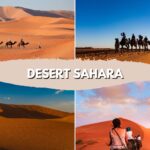
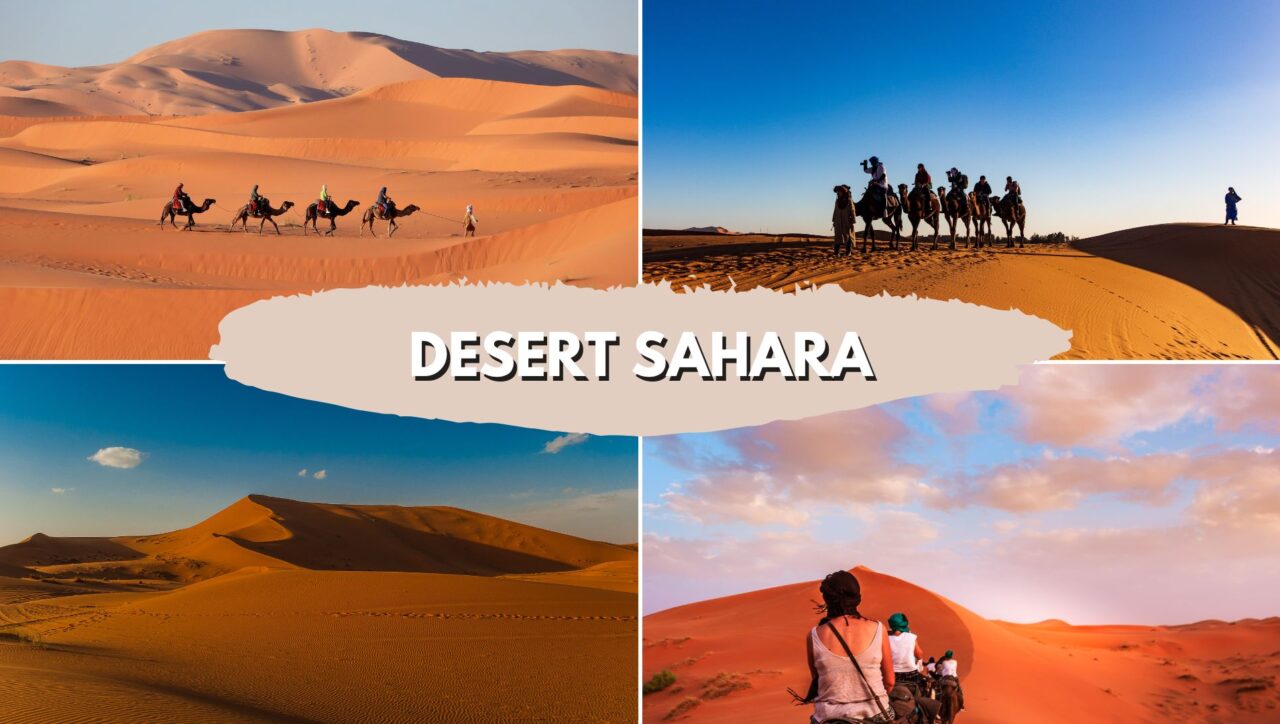
In the far southeastern corner of Morocco, where the asphalt ends and the desert begins, lies Merzouga—a small desert village that serves as the gateway to one of Earth’s most mesmerizing landscapes: the Erg Chebbi dunes. Rising up to 150 meters (490 feet) like waves of molten gold, these towering sand dunes are among the tallest in North Africa, offering a raw, silent, and profoundly spiritual encounter with the Sahara Desert.
Unlike the cinematic kasbahs of the south or the bustling medinas of the north, Merzouga doesn’t dazzle with architecture or noise. Instead, it enchants through absence—the absence of light pollution, traffic, and digital distraction. Here, time slows, stars blaze with impossible clarity, and the only soundtrack is the whisper of wind shaping the dunes. For travelers seeking solitude, wonder, and a true desert awakening, Merzouga is not just a destination—it’s a revelation.
Why Merzouga Stands Out Among Morocco’s Desert Destinations
While Morocco has other desert gateways—like Zagora or the remote Erg Chigaga—Merzouga and Erg Chebbi are special for their accessibility, dramatic scale, and immersive experiences. The dunes here are constantly shifting, sculpted by the wind into crescent-shaped barchans that glow fiery orange at sunrise and soft violet at dusk. Thanks to underground water sources, the area also supports a surprising amount of life—date palms, desert foxes, and hardy acacia trees dot the surrounding hamadas (rocky plains).
And unlike more commercialized desert hubs, Merzouga retains a humble, authentic charm. The village itself is a cluster of simple guesthouses, Berber camps, and nomadic families who have lived in harmony with the desert for generations.
The Heart of the Experience: Erg Chebbi
The magic of Merzouga lies in Erg Chebbi, the 28-km-long sea of sand that begins just beyond the village edge. This is where your desert journey truly begins:
🐫 Sunset Camel Trek
As the sun dips toward the horizon, you’ll mount a gentle camel—led by a local Berber guide—and ride into the dunes. The rhythmic sway, the soft crunch of sand, and the vast silence create a meditative state unlike any other. At the highest dune, you’ll watch the sky ignite in hues of amber, rose, and indigo—a moment many travelers describe as life-changing.
🌌 Overnight in a Luxury Desert Camp
After sunset, arrive at your Berber-style desert camp, where low tables, plush rugs, and flickering lanterns await. Enjoy a traditional tagine dinner under a sky so clear you can see the Milky Way arch overhead. Many camps offer live Gnaoua music, drumming, and storytelling around the fire—followed by deep, quiet sleep in comfortable tents.
🌅 Sahara Sunrise
Wake before dawn to witness the sunrise over Erg Chebbi—a golden light that slowly washes over the dunes, revealing every ripple and shadow. It’s a moment of pure stillness, often accompanied only by the call of a desert bird or the soft breath of the wind.
Beyond the Dunes: Cultural Encounters in Merzouga
Merzouga isn’t just about sand—it’s about people and heritage:
-
Khamlia Village: Just 5 km from Merzouga, this small settlement is home to descendants of enslaved people from sub-Saharan Africa. They preserve the spiritual Gnaoua music tradition—a hypnotic blend of rhythm, chant, and dance used for healing and celebration. Many camps include a visit or performance.
-
Nomadic Encounters: Meet Berber and Tuareg nomads in the surrounding hamada (stony desert). Share mint tea in their tents, learn about desert survival, and hear stories passed down through generations.
-
Fossil Hunting in Erfoud: On your way to Merzouga, stop in Erfoud—the “Gateway to the Sahara”—where the desert was once an ancient seabed. Visit local workshops to see 300-million-year-old trilobites and ammonites being polished into art.
When to Visit Merzouga
- October–April: Ideal temperatures (15–25°C / 59–77°F during the day; cool at night). Perfect for desert exploration.
- May–September: Very hot (up to 45°C / 113°F)—not recommended for most travelers.
- Avoid July & August: Extreme heat makes desert activities unsafe.
💡 Pro Tip: For the clearest skies and best stargazing, visit during a new moon.
Sustainability & Responsible Travel
As Merzouga grows in popularity, responsible tourism is critical. At Blissful Morocco Tours, we partner with eco-conscious desert camps that:
- Use solar power and composting toilets
- Employ local Berber guides and staff
- Avoid single-use plastics
- Respect nomadic communities and sacred sites
We encourage travelers to leave no trace, carry reusable water bottles, and support local artisans—not mass-market souvenirs.
How to Get to Merzouga
Merzouga is remote—10+ hours by road from Marrakech or 8 hours from Fes—but the journey is part of the adventure. Most travelers visit as part of a multi-day desert tour that includes stops in the Atlas Mountains, Dades Gorge, and Todra Gorge. While flights don’t go directly to Merzouga, private 4×4 transfers with expert drivers ensure comfort and safety on rugged desert tracks.
Final Thoughts: The Desert That Changes You
Merzouga doesn’t offer luxury in the conventional sense. There are no spas, no nightclubs, no Wi-Fi in the dunes. But it offers something far more valuable: perspective.
In the silence of Erg Chebbi, surrounded by endless sand and infinite stars, the noise of everyday life fades away. You remember what it feels like to be small—and yet deeply connected—to something ancient and eternal.
As the Berbers say:
“The desert is not empty. It is full of soul.”
Come to Merzouga not to escape the world—but to remember your place within it.
Welcome to the heart of the Sahara. Welcome to Merzouga. 🇲🇦✨